
Quick Specs
 Party / Cooperative / Hand Management / Deduction
 8+
8+ ~1.1/5 (Very Light)
 2–4 (best at 3–4, works up to 6 with expansions)
 ~20–30 min
 Cooperative Play, Hand Management, Timing Deduction, Incremental Difficulty, Non-Verbal Communication
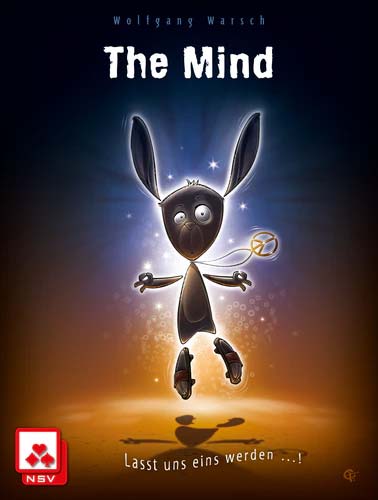
The Mind is the deceptively simple game that turns a table of calm friends into a tense, telepathic guessing experiment. Players work together to play numbered cards in ascending order without talking, relying entirely on intuition, timing, and subtle cues. It’s magical, oddly suspenseful, and perfect for parties or quick cooperative sessions.
What it is
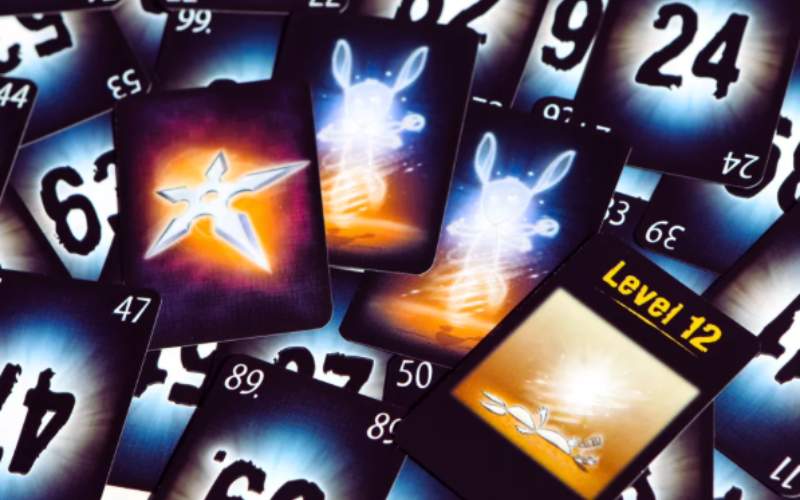
This is a cooperative card game where each player has a hand of numbered cards for each round. The goal is to collectively play all the cards in ascending order without revealing numbers or discussing who holds what. The challenge grows as rounds progress and hands get larger, requiring players to read each other’s timing and non-verbal “signals” without explicit communication.
The setup
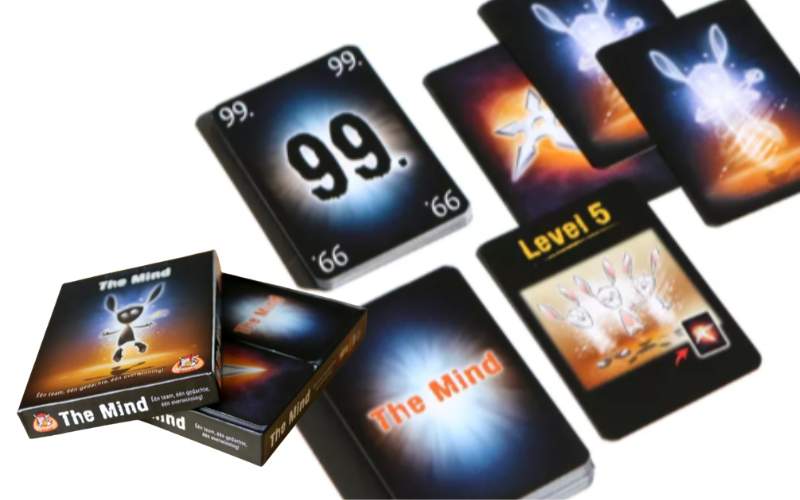
Shuffle the deck of numbered cards (1–100). Deal the first round: each player gets one card, the second round two cards, and so on. Each player also gets a life token, which is lost if a card is played out of order, and the team has a limited number of “throwing star” tokens to discard a lowest card safely.
How it plays
Players play cards to the center of the table in ascending order. There’s no turn structure—anyone can play a card at any time. Timing is everything: too fast, and mistakes happen; too slow, and the round drags. Life tokens punish mistakes, while throwing stars allow strategic discards. Each successful round increases difficulty, giving the game a natural tension curve.
The beauty of The Mind is its simplicity: no reading, no complex math, just watching each other and synchronizing silently. Success feels almost magical, failure is a shared gasp, and every round is a mini “team meditation in suspense.”
Why the pacing works
- Early rounds: easy and reassuring, building rhythm and trust
- Midgame: timing becomes tense, mistakes are costly, focus peaks
- Late rounds: high-stakes synchronization—one misstep can cost a life and end the streak
Table feel
Highly interactive in a cooperative, non-verbal way. It works best at 3–4, where players can sense the rhythm but still miscommunicate subtly for suspense. At 2, it’s more predictable; at 5–6 (with expansions), it’s chaotic but hilarious. Minimal downtime keeps all players engaged.
Who it’s for
- Groups who love cooperative, tension-based games
- Players who enjoy hand management and non-verbal deduction
- Best for parties, casual game nights, and icebreakers
- You’ll like it if you want a game that’s easy to learn but thrilling in execution
Less ideal for
- Not great for players who dislike silence or pressure
- Avoid if your group prefers traditional turn-taking or verbal strategy
- Also note: the challenge comes from coordination, not complexity
Desert Meeples Beginner Tip + Verdict
New to The Mind? Focus on shared pacing, not numbers. Watch breathing, gestures, and tempo—everyone will develop a silent rhythm over rounds. Don’t overthink; the goal is alignment, not calculation. Throwing stars are precious, so use them wisely.
Verdict: The Mind is deceptively simple, surprisingly tense, and incredibly fun. It’s perfect for groups who enjoy cooperative focus, intuitive play, and the occasional “wow, we actually did it” moment that makes the game feel like magic.

