
Quick Specs
 Family / Strategy / Engine Building / Card Development
 10+
10+ ~1.9/5 (Light–Medium)
 2–4 (best at 3–4
 ~30–45 min
 Set Collection, Engine Building, Card Drafting, Resource Management (gems), Point-to-Point Progression
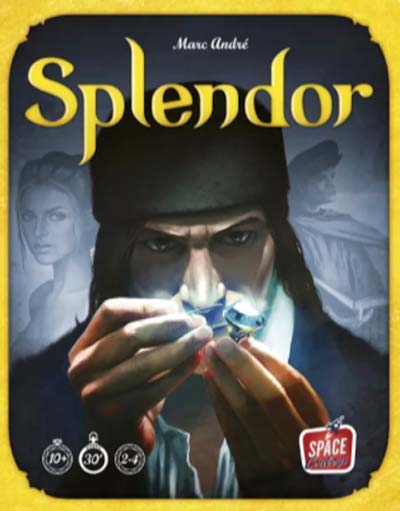
Splendor is the sleek, satisfying game of gem collection and engine building that feels like running a Renaissance merchant empire in fifteen minutes. Players collect gem tokens, buy development cards, and build combos that let them purchase even better cards or earn nobles. It’s simple to learn, fast to play, and offers a surprisingly strategic puzzle in a tiny box.
What it is
This is a resource management and engine-building game where players accumulate gems to purchase cards, which in turn give permanent bonuses and points. Some cards also attract nobles, granting extra points. The first player to reach the target points wins, but every turn requires careful consideration of gem acquisition, card selection, and timing.
The setup
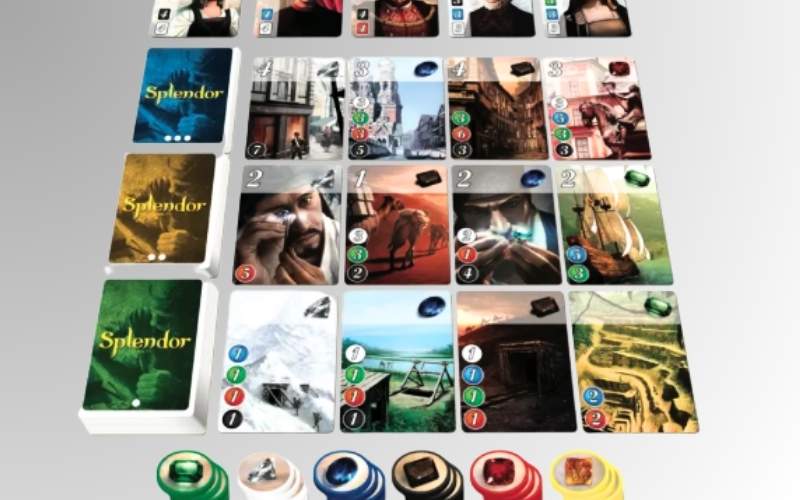
Lay out the development cards in three levels (tiers) and deal three noble tiles per player count. Place gem tokens in piles according to player count. Each player starts with no cards or tokens. That’s it—the game is ready to start immediately.
How it plays
On your turn, you can do one of three things:
- Take tokens: 3 different gems or 2 of the same type (if enough are available)
- Reserve a card: take a card into your hand and collect a gold joker token
- Buy a card: spend tokens to claim a card and its permanent gem bonus
Every card you buy improves your purchasing power, allowing bigger and better cards later. Some cards also unlock nobles automatically if your permanent gem collection meets the requirement. The tension comes from balancing short-term gains against long-term engine building while denying key cards to opponents.
Why the pacing works
- Early game: everyone collects gems and reserves cards, building small engines
- Midgame: players start to buy more expensive cards, combos form, and competition for nobles heats up
- Late game: turns become decisive—big card purchases can swing points or secure crucial nobles, and the game often ends suddenly
Table feel
Splendor is competitive but polite. There’s no direct attack; interaction comes from racing for key cards or nobles. Best at 3–4, where choices matter and the pace is lively. At 2, it’s quieter and more tactical; the engine-building feel is very personal.
Who it’s for
- Groups who love clean, efficient strategy and resource management
- Players who enjoy building engines, planning ahead, and racing for points
- Best for families, casual strategy nights, or as a gateway game
- You’ll like it if you want a satisfying, low-conflict puzzle in a short session
Less ideal for
- Not great for players who dislike abstract themes or indirect interaction
- Avoid if your group wants high drama or direct player confrontation
- Also note: luck exists only in the card layout; planning and timing are key to success
Desert Meeples Beginner Tip + Verdict
New to Splendor? Focus on buying cards that build your permanent gem bonuses early, rather than chasing points alone. Reserving cards strategically prevents opponents from snatching them and gives you flexibility. Watch nobles—sometimes building toward them is a bigger payoff than a high-cost card.
Verdict: Splendor is a modern classic: simple to teach, quick to play, and rewarding every turn. It’s smooth, elegant, and perfect for anyone who loves building engines, collecting sets, and feeling clever without a heavy rulebook.

