Quick Specs
 Heavy Strategy / Economic / City-Building
 14+
14+ ~4.3/5 (Very Heavy)
 1–4 (best at 2–3)
 ~120–180 min
 Action Selection (multi-option cards), Hand Management, Resource Management, Tile/Building Placement, Income Engine, Victory Point Optimization, Historical Event Timing

Lisboa is the kind of game that looks like a city rebuild after a disaster, but under the hood it’s a brain-bending economic puzzle. You’re managing influence, construction, and reconstruction in post-1755 Lisbon, trying to convert actions into points while keeping your economy humming. It’s elegant, intimidating, and requires attention to every decision—one wrong purchase or poorly timed event can ripple across the entire game.
What it is
This is a heavy city-building and economic game where players use cards to trigger multiple actions: collect money, recruit citizens, purchase buildings, construct landmarks, or influence the market. Each action can chain into others, so planning and timing are critical. There’s also a historical flavor: events from the 1755 Lisbon earthquake shape opportunities and constraints, making every playthrough a fresh puzzle.
The setup
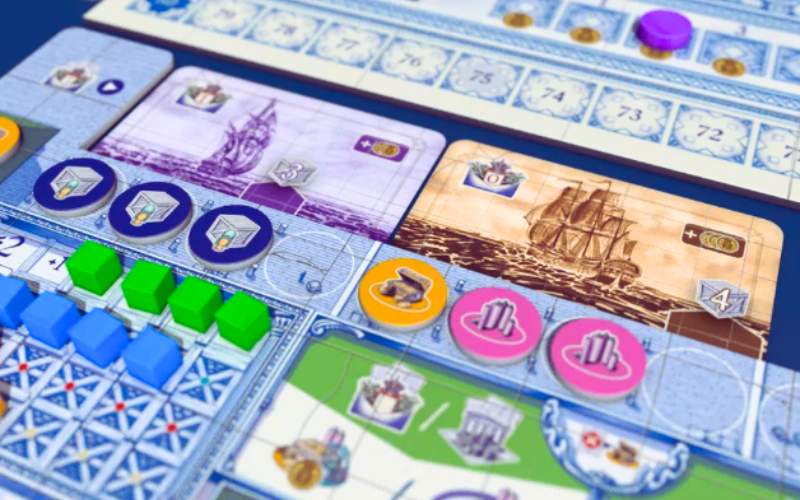
Players get a hand of multi-use cards, starting resources, and a few building tiles. The board displays the city districts, landmarks, and market tracks. Event cards are shuffled to add constraints and opportunities at specific points in the game, requiring flexibility and careful timing.
How it plays
On your turn, you choose a card and execute one of its action options. Money, citizens, and resources feed your economy, while buildings and landmarks generate points. Actions often unlock further options, and careful sequencing allows you to create powerful chains. Timing is everything: events may force or block certain actions, and missing a key economic moment can cost you a lot of points.
The tension comes from juggling multiple threads: maintaining a steady income, executing a construction plan, managing the card deck efficiently, and reacting to events. Every decision has a visible and invisible impact, so even small miscalculations carry weight.
Why the pacing works
- Early game: setting up income, securing key citizens and buildings
- Midgame: chains begin firing, events create opportunities or bottlenecks, competition tightens
- Late game: convert your infrastructure into victory points and execute endgame scoring before opponents capitalize
Table feel
Lisboa is deeply interactive through the competition for cards, market resources, and construction opportunities. It’s not confrontational in a “take-that” sense, but players constantly influence what’s available to others. Best at 2–3, where planning and execution are tight, but still engaging at 4 if your group is comfortable with a long, thinky session.
Who it’s for
- Players who love economic puzzles, engine-building, and historical city strategy
- Groups who enjoy high planning, timing, and juggling multiple systems
- Best for serious strategy sessions or “main event” game nights
- You’ll like it if you want a game with depth, elegance, and a satisfying planning puzzle
Less ideal for
- Not great for casual or short game sessions; teaching can take 20–30 minutes
- Avoid if your group dislikes heavy planning or analysis-paralysis risk
- Also note: luck is minimal; success relies on planning, sequencing, and reacting to events
Desert Meeples Beginner Tip + Verdict
New to Lisboa? Focus early on securing citizens and income sources—without them, your turn efficiency collapses. Pay attention to card order: timing your actions relative to events is crucial. Don’t overcommit to a single chain; flexibility allows you to adapt to events and opponent plays.
Verdict: Lisboa is a masterpiece of economic and engine-building design: gorgeous, challenging, and highly rewarding. It’s a long, intense, and deeply strategic game, perfect for groups who love planning, optimization, and historical flavor. One of those games that makes you feel like an urban architect—and a very tired one by the end.