
Quick Specs
 Family / Cooperative / Adventure Puzzle
 10+
10+ ~1.7/5 (Light–Medium)
 2–4 (best at 3–4)
 ~30 min
 Cooperative Play, Action Point Allowance, Modular Board (tile layout), Hand Management (set collection), Rising Tension Track, Variable Player Powers
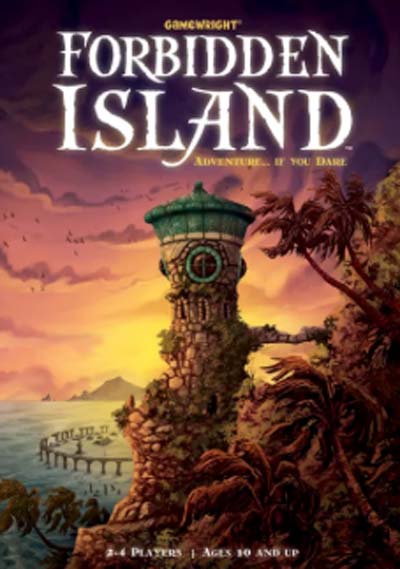
Forbidden Island is co-op gaming in its purest “we’ve got this—wait, no we don’t” form. You’re a team of adventurers racing to grab treasure from a sinking island before it disappears under the sea. The rules are friendly, the turns are quick, and the tension climbs fast because the island is literally falling apart while you’re politely discussing options like you’re not all about to drown.
What it is
This is a light-to-medium cooperative puzzle where players work together to collect four treasures and then escape by helicopter. The island floods over time, tiles vanish, and suddenly the “short route” is underwater. It’s a great gateway co-op because it teaches teamwork, planning, and “please stop panicking” decision-making without being rules-heavy.
The setup
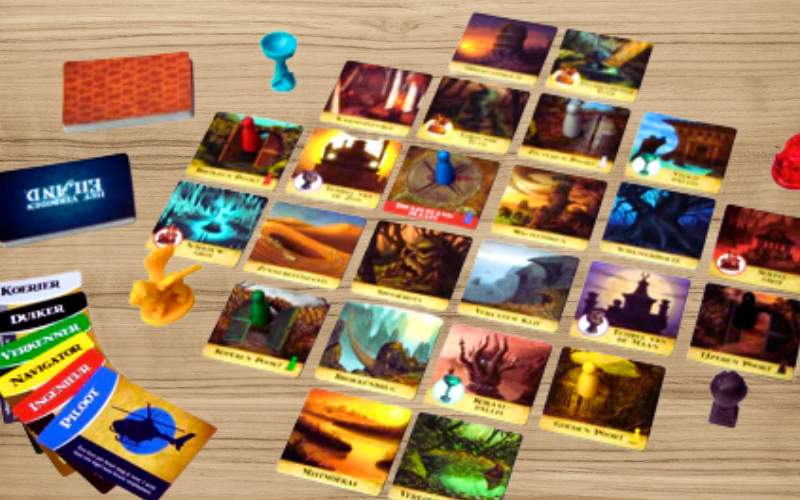
The island is built from tiles laid out in a grid, each representing a location. Two decks drive the chaos: one floods tiles, and the other gives players treasure cards and occasional nasty surprises. Each player gets a role with a special power—small abilities that create just enough asymmetry to make teamwork feel real (“You handle movement, I’ll handle flood control, someone please fetch the treasure cards before the ocean eats them”).
How it plays
On your turn you spend a few actions to move, shore up flooded tiles (saving them from sinking), trade cards, or capture a treasure if you’ve collected the right set. Then the island hits back: more tiles flood, and sometimes disaster cards make everything worse. The tension comes from triage. You can’t save everything, so you’re constantly deciding what matters: do you chase treasure, rescue teammates, or stabilize the island so you don’t lose the whole map?
It’s clean, fast, and surprisingly intense for a game that looks like it belongs in a family movie night.
Why the pacing works
- Early game: you feel organized and heroic, making efficient plans and high-fiving yourselves
- Midgame: the island starts breaking, and every turn becomes “okay, what do we sacrifice?”
- Late game: pure co-op panic—but the fun kind—where one smart sequence can win or the island can collapse in two flips
Table feel
Forbidden Island is very “talky” co-op, but not in a complicated way. Everyone stays involved because decisions are shared and the board state is always changing. It’s best at 3–4, where roles synergize and the island feels appropriately threatened. At 2 players it still works well, just a bit more controllable and less chaotic. It’s also great for newer gamers because the story is obvious: the island is sinking, do the thing before it’s gone.
Who it’s for
- Families and mixed groups who want a cooperative game with real tension
- Players who enjoy planning together and feeling clever as a team
- Best for gateway nights, younger gamers, and people who want co-op without heavy rules
- You’ll like it if you enjoy “escape the collapsing situation” puzzles
Less ideal for
- Not great for players who dislike cooperative discussion or shared decision-making
- Avoid if your group suffers from quarterbacking (one person making all the calls)
- Also note: it can feel swingy depending on card draws, especially at higher difficulty—embrace the drama
Desert Meeples Beginner Tip + Verdict
New to Forbidden Island? Don’t play like you can save everything—you can’t. Shore up the tiles that keep the team connected, trade cards early so treasures don’t get stuck on the wrong person, and remember: escaping is part of the win condition, not an afterthought. Also, if someone says “We have time,” flip a flood card immediately and let the island answer that for you.
Verdict: Forbidden Island is an all-time gateway co-op: fast teach, constant teamwork, and just enough panic to make the win feel earned. It’s the kind of game that ends with everyone exhaling at once… and immediately saying, “Okay, same roles again, but smarter this time.”

