
Quick Specs
 Family / Strategy / Trading / Tile-Laying
 10+
10+ ~2.0/5 (Light–Medium)
 3–4 (best at 4, expansions allow 5–6)
 ~60–90 min
 Tile Placement, Resource Management, Trading, Set Collection, Variable Board Setup, Victory Point Goals
Catan is the classic gateway strategy game that transformed many tables into bustling settlements full of roads, cities, and polite (and sometimes not-so-polite) negotiation. Players gather resources, trade with each other, and expand their settlements across a modular hex board, racing to reach a set number of victory points first. It’s approachable enough for families and new gamers, yet the trading and placement decisions provide enough depth to keep hobbyists engaged.
What it is
This is a resource-management and area-control game where players collect resources based on the hexes their settlements touch and use them to build roads, settlements, and cities. The first player to reach the target victory points wins. Trading and negotiation are central, turning casual turns into strategic bargaining sessions.
The setup
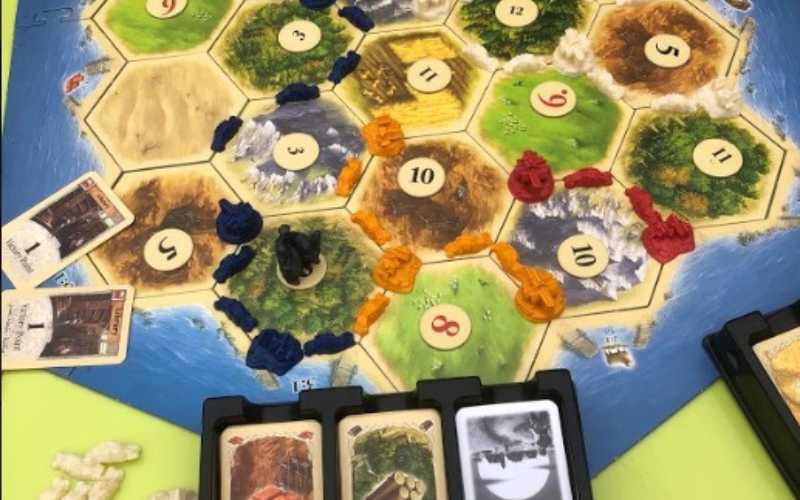
The hex board is built randomly each game using resource tiles (brick, lumber, wheat, ore, sheep) and number tokens. Players place starting settlements and roads, then the game begins with turns that cycle clockwise. A robber token is also in play, adding a tactical and blocking element.
How it plays
Each turn follows a simple loop:
- Roll the dice to produce resources for settlements on matching numbers.
- Trade with other players or the bank.
- Spend resources to build roads, settlements, cities, or buy development cards.
Special cards and the robber add tactical depth: the robber can block resources and add theft opportunities, while development cards provide points or special actions. Trading is crucial—your success depends on making deals while optimizing your own growth.
Why the pacing works
- Early game: everyone establishes settlements, starts collecting resources, and evaluates trading options
- Midgame: roads expand, settlements cluster, the robber comes into play, and competition heats up
- Late game: key settlements and cities are contested, development cards are strategically played, and victory points race to the finish
Table feel
Catan is highly interactive, especially through trading and blocking with the robber. Players must communicate, negotiate, and sometimes bluff to succeed. It’s best at 4 players for the full trading and competition dynamic. Fewer players make trades less dynamic but still strategic.
Who it’s for
- Families and casual gamers who want approachable strategy and social interaction
- Players who enjoy trading, planning, and area-control mechanics
- Best for gateway strategy game nights, friendly competitions, and social play
- You’ll like it if you enjoy building, trading, and watching plans unfold on a modular board
Less ideal for
- Not great for groups that dislike negotiation or indirect conflict
- Avoid if you want a pure solitaire-style puzzle without player interaction
- Also note: some luck exists from dice rolls, but strategic trading and placement usually dominate
Desert Meeples Beginner Tip + Verdict
New to Catan? Focus early on balancing resources and positioning settlements on high-frequency numbers. Don’t hoard too many cards—trading is often more powerful than keeping everything for a single build. Keep an eye on opponents’ points and block strategically with the robber.
Verdict: Catan is a timeless classic: easy to learn, deeply social, and endlessly replayable. It’s the perfect mix of luck, strategy, and negotiation that made it a gateway into modern board gaming for millions.

