Quick Specs
 Family / Puzzle / Tile-Laying
 10+
10+ ~1.8/5 (Light–Medium)
 1-4 (best at 2-4)
 ~30–45 min
 Tile Placement, Drafting (tile + token pair), Pattern Building, Set Collection, Variable Scoring Cards
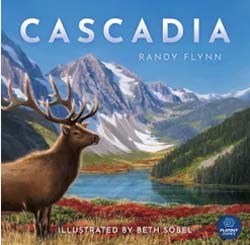
Cascadia is the board game equivalent of taking a deep breath. You’re building a little Pacific Northwest habitat—forests, mountains, rivers, wetlands—then inviting wildlife to move in. It’s calm, clean, and satisfying in a “one more turn” way… right up until you realize your friend quietly built the perfect salmon superhighway while you were busy admiring your cute bear family.
What it is
This is a tile-laying puzzle where you’re trying to make a landscape that scores well in multiple ways at once. The vibe is cozy, but the decisions are real: every pick is a trade-off between making your map fit nicely and grabbing the animals you need before someone else does.
The setup
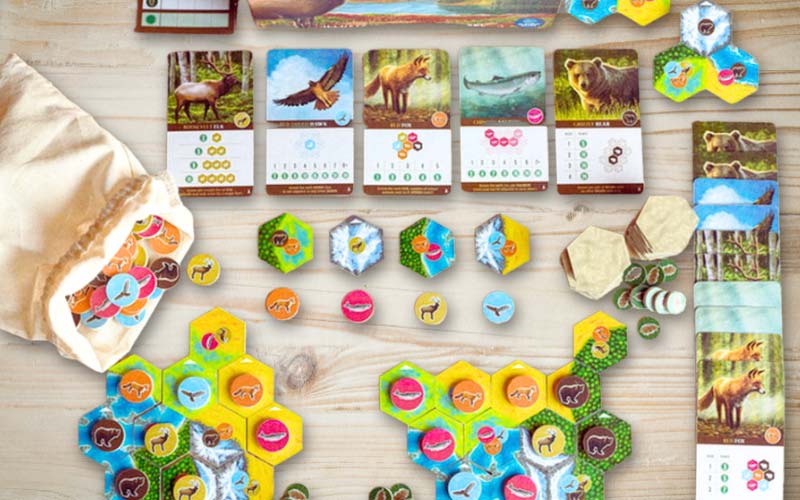
Each game uses a set of wildlife scoring cards (bear, elk, salmon, hawk, fox). That’s a big reason it stays fresh: the rules stay simple, but the scoring goals change, so your “best strategy” changes with them. You’ll also build your own habitat area in front of you, so it feels personal—your little nature tableau, your little problems.
How it plays
On your turn you choose one pair from the market: a habitat tile plus a wildlife token. You add the tile to your growing map (matching habitat edges), then place the animal token onto the correct habitat type. That’s it—quick turns, constant small choices. The tension comes from the draft: do you take the perfect tile shape, or the animal you desperately need before it disappears? And can you do both without creating a sad, lonely swamp that touches nothing and scores exactly zero?
Why the pacing works
- Early game: you’re building “a nice map” and feeling very relaxed about life
- Midgame: you start reading the scoring cards like a contract and realizing you are, in fact, behind
- Late game: every pick feels personal because one tile can fix your whole plan or ruin it with a single awkward corner
Table feel
Interaction is gentle but constant. You’re not attacking anyone, but you are watching what they need and occasionally taking it with the innocence of someone selecting a “totally normal” tile. Downtime is low because turns are fast and the choices stay focused. It’s great at 2–4, and it’s also one of those rare games where the solo mode is actually worth playing if you like relaxing puzzles.
Who it’s for
- Groups who love chill games with satisfying combos and no take-that
- Players who enjoy spatial puzzles, optimizing, and “I can totally make this fit” optimism
- Best for couples, families, and mixed-experience tables
- You’ll like it if you want something calmer than heavy strategy but smarter than pure luck
Less ideal for
- Not great for players who want direct conflict, negotiation, or big “gotcha” moments
- Avoid if your group gets bored without strong interaction or table drama
- Also note: if scoring salads make your eyes glaze over, you’ll want to start with the simpler scoring cards first
Desert Meeples Beginner Tip + Verdict
New to Cascadia? Don’t try to win everything. Pick two animals to prioritize, then build habitats that keep your options open (big connected areas are your best friend). Also: early “pretty map” decisions become late-game regrets—be kind to your future self.
Verdict: Cascadia is a smooth, clever, low-stress tile-layer that makes everyone feel smart without frying their brain. It’s the kind of game you finish and immediately want to reset—because this time you’ll definitely make room for the salmon… right?