
Quick Specs
 Family / Gateway Strategy / Route Building
 8+
8+ ~1.9/5 (Light–Medium)
 2–5 (best at 4–5, great at 2)
 ~30–60 min
 Set Collection, Network/Route Building, Card Drafting, Point-to-Point Movement, Hidden Objectives (tickets), Light Blocking
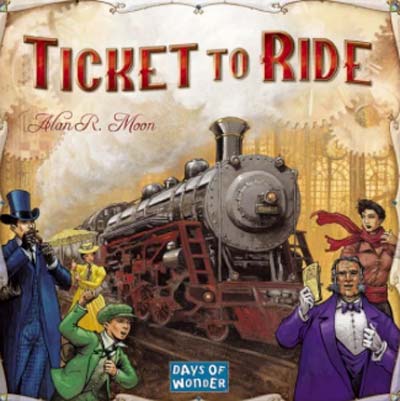
Ticket to Ride is the gateway game that turns “I’m just building cute little train routes” into “WHY would you take that track, it was clearly mine in my heart.” It’s colorful, fast to teach, and instantly readable: draw cards, claim routes, connect cities, score points. The brilliance is how it stays friendly while still creating real tension—because the map is shared, space is limited, and your secret tickets are quietly judging you.
What it is
This is a route-building game where you collect colored train cards to claim connections between cities on a map. You’re trying to complete destination tickets (secret objectives) while also building long routes and grabbing high-value connections. The rules are simple, but the decisions matter because timing and positioning can make or break your tickets.
The setup
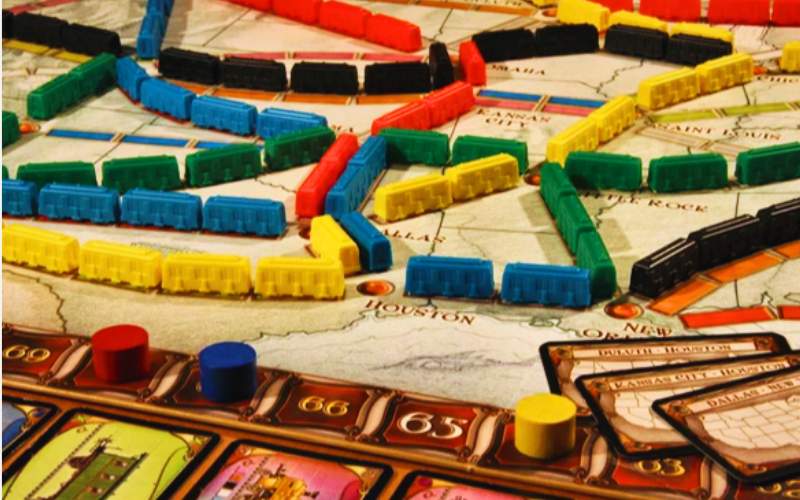
Each player gets a pile of little plastic trains, a hand of train cards, and a few destination tickets that tell you which cities you need to connect. You keep some tickets and discard the rest—so you start the game with a plan, but not a perfect one. The rest of the deck is the engine: draw cards, build routes, repeat until someone runs low on trains and triggers the endgame.
How it plays
On your turn you usually do one of three things:
- Draw train cards (to build toward future routes)
- Claim a route (spend cards to place trains and score points)
- Draw more destination tickets (more points if you complete them… more regret if you don’t)
That’s the loop, and it’s why it’s such a great gateway. The tension comes from the map. You’re trying to finish your tickets efficiently, but opponents can block key routes, forcing detours. Sometimes that’s accidental. Sometimes it’s not. The best games have that moment where everyone realizes the middle of the map is a traffic jam and suddenly “friendly trains” becomes “diplomatic negotiations with plastic.”
Why the pacing works
- Early game: gathering cards, quietly expanding, and pretending nobody can see your plan
- Midgame: routes get contested, players race for key connections, and the first big block happens
- Late game: you’re sprinting to finish tickets, deciding whether to take new ones, and praying your last link isn’t stolen
Table feel
Ticket to Ride is interactive without being aggressive. The main conflict is blocking and racing for routes, which makes it exciting but still family-friendly. It’s best at 4–5 for lively competition and a busy map, but it’s also excellent at 2, where it becomes more tactical and controlled. It’s one of the best games for mixed-experience tables because new players can play intuitively while experienced players can optimize routes and timing.
Who it’s for
- Groups who love approachable strategy with clear goals and satisfying progress
- Players who enjoy planning routes, balancing risk, and reading the map
- Best for families, new gamers, and game nights with mixed experience levels
- You’ll like it if you want a “real strategy game” that teaches in 5 minutes
Less ideal for
- Not great for players who want deep complexity or heavy interaction
- Avoid if your group hates any blocking at all (because even “accidental” blocks will happen)
- Also note: drawing tickets late is exciting, but it’s also where people lose by 20 points in one decision
Desert Meeples Beginner Tip + Verdict
New to Ticket to Ride? Build flexibility early. Don’t rely on one single critical connection if you can help it—have a backup route or two before the map tightens. Claim key chokepoints sooner than feels polite, and don’t be afraid to take a slightly longer path if it keeps you safe. Also: only draw extra tickets late if you’re already in a good position to complete them—otherwise you’re basically buying stress.
Verdict: Ticket to Ride is a modern classic gateway for a reason: simple rules, constant engagement, and a map that creates just enough tension to keep everyone invested. It’s friendly enough for families, smart enough for hobby gamers, and reliable enough that it almost always produces a fun, close finish—plus at least one person dramatically blaming “that one track.”

