
Quick Specs
 Kids / Family / Cooperative Deduction
 5+
5+ ~1.2/5 (Light)
 2–4 (best at 3–4)
 ~15–20 min
 Cooperative Play, Deduction by Elimination, Dice Rolling, Set Collection (clues), Grid/Attribute Logic (suspects)
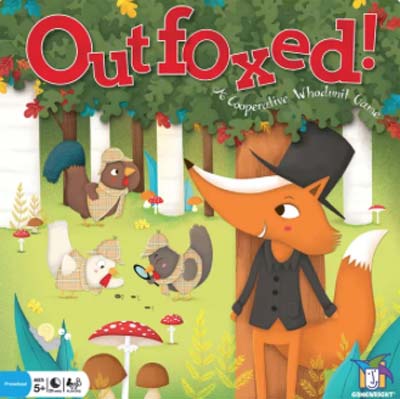
Outfoxed! is basically “Clue” for kids, but cooperative, faster, and with a very cute sense of urgency. Someone stole the pot pie (crime of the century), and you’re a team of detectives trying to figure out which fox did it before the culprit escapes. It’s approachable, tactile, and genuinely satisfying because kids get to do real deduction: eliminate suspects, narrow the list, and make the final accusation together.
What it is
This is a cooperative deduction game where players collect clues that tell them what the thief is not (for example: not wearing glasses, not holding a certain item, not wearing a specific outfit color). You use those clues to eliminate suspects on a roster until you’re confident enough to accuse the right fox. The best part is that everyone is working together, so it feels like a shared mystery rather than a competition.
The setup
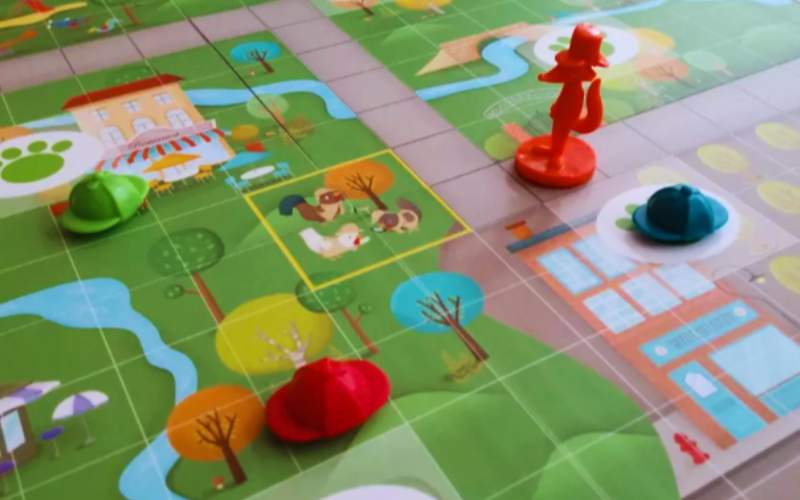
You set up a line-up of fox suspects, each with a mix of traits (clothing, items, accessories). The thief token starts trying to escape down a track, and your team needs to gather enough evidence before it reaches the end. Players also have a detective pawn moving around the board to search for clues.
How it plays
On your turn, you roll dice and choose how to use the results—move, search, reveal a clue, or work toward getting the evidence you need. When you reveal a clue, you compare it to the suspect line-up and eliminate all the foxes that don’t match. The tension comes from the race element: you’re trying to be thorough, but the thief is moving too, so you can’t just take forever debating every detail.
It’s an excellent “first deduction game” because the logic is clear and visual. Kids can point and say, “This fox has glasses, so it can’t be them,” and they’re doing the actual reasoning, not just guessing.
Why the pacing works
- Early game: you’re excited, flipping clues, and eliminating big chunks of suspects quickly
- Midgame: the list narrows, clues feel more valuable, and teamwork matters more
- Late game: the table gets quiet in the best way—everyone is double-checking traits like serious little detectives
Table feel
Outfoxed! is cooperative, positive, and inclusive. There’s some randomness from dice, but it supports the adventure feel rather than replacing the deduction. Adults stay engaged because helping kids reason is genuinely fun, and kids love the physicality of moving pieces, revealing clues, and watching suspects get ruled out. It’s best at 3–4, where everyone gets turns and the table discussion stays lively.
Who it’s for
- Families with younger kids who want a real “mystery game” without complexity
- Kids who love roleplay (“we’re detectives!”) and spotting visual details
- Best for ages 5–8 as a gateway to logic and deduction games
- You’ll like it if you want cooperative play that feels clever, not stressful
Less ideal for
- Not great for groups wanting deep strategy or lots of replay complexity
- Avoid if your kids dislike losing—sometimes the thief escapes, and that’s part of the game
- Also note: grown-ups looking for a serious challenge will outgrow it, but as a kids’ game it’s excellent at what it does
Desert Meeples Beginner Tip + Verdict
New to Outfoxed!? Let the kids lead the deduction. Adults can help by asking guiding questions: “Which foxes have that item?” “Who can we eliminate?” Also, don’t wait for “perfect certainty”—when the suspect list is small, it’s okay to take the shot before the thief reaches the exit.
Verdict: Outfoxed! is one of the best cooperative deduction games for kids: quick, clear, and genuinely satisfying when the table cracks the case together. It makes children feel smart, keeps adults involved, and turns “who stole the pie?” into a tiny family victory moment.

