Quick Specs
 Family / Tile-Laying / Area Control
 7+
7+ ~1.7/5 (Light–Medium)
 2–5 (best at 3–4)
 ~30–45 min
 Tile Placement, Area Majority, Set Collection (meeples), Map Building, Variable Scoring (cities, roads, monasteries, fields)
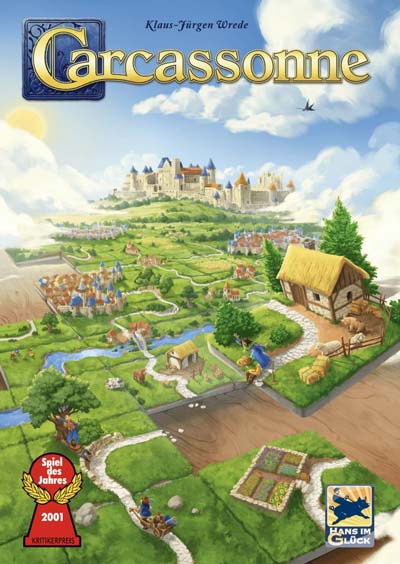
Carcassonne is the game that turns a table into a medieval landscape-builder, where tiny meeples become knights, farmers, and thieves in a quietly competitive world of roads and cities. It’s simple to learn, endlessly replayable, and perfect for families or casual groups—because even though the rules are light, the strategic choices can be surprisingly deep.
What it is
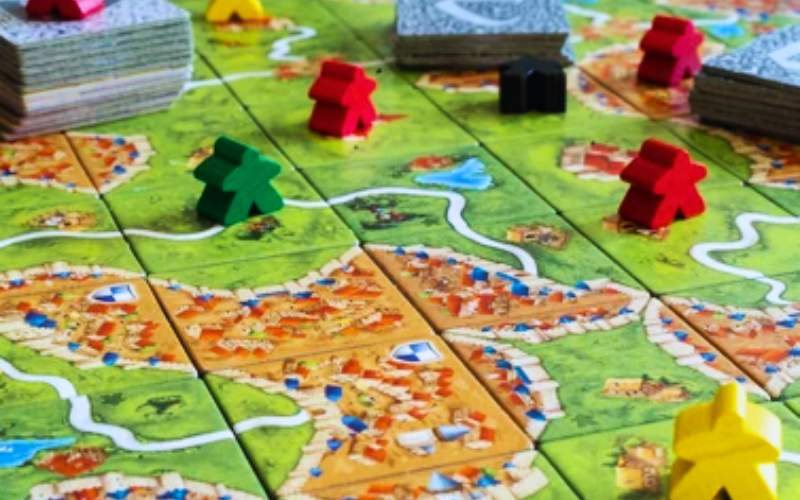
This is a tile-laying game where players build the map as they go. Each turn, you draw a tile and place it to extend cities, roads, or fields, then optionally place a meeple on that feature to score points. The tension comes from placement: do you build your own city or road? Do you block your opponents? Do you invest a meeple in a risky field that might pay off at the end?
The setup
Start with the starting tile on the table. Shuffle the rest of the tiles into a draw pile. Each player begins with a set number of meeples, ready to claim features. Tiles connect based on terrain features, and the board grows organically as turns proceed.
How it plays
On your turn: draw a tile, place it according to the terrain rules, then optionally place a meeple on a road, city, monastery, or field. Completed features score points immediately (cities, roads, monasteries), while fields score at the end. The strategic depth is in managing your limited meeples while maximizing points: sometimes it’s worth leaving a road unclaimed, sometimes it’s better to block a neighbor’s city, and sometimes patience pays off as features grow.
Why the pacing works
- Early game: everyone is laying tiles cautiously, placing meeples on low-risk features
- Midgame: the map starts connecting, competition emerges, and blocking opportunities become more important
- Late game: the remaining tiles complete cities, roads, and fields, and every decision can swing the final scoring
Table feel
Carcassonne is lightly interactive. Most competition comes from deciding where to place tiles and whether to compete for features with opponents. It scales nicely for 3–4 players, where there’s enough opportunity for strategy and blocking, but even at 2 it’s a satisfying head-to-head puzzle. Downtime is low, and turns are quick, keeping everyone engaged.
Who it’s for
- Families and mixed groups who want a light-to-medium strategy game
- Players who enjoy spatial puzzles, planning, and indirect interaction
- Best for game nights, casual strategy sessions, or as a gateway game
- You’ll like it if you enjoy building something together while subtly competing
Less ideal for
- Not great for players who dislike limited interaction or passive opponents
- Avoid if your group wants direct confrontation or long-term aggressive play
- Also note: expansions add variety and strategic depth, but the base game is plenty fun on its own
Desert Meeples Beginner Tip + Verdict
New to Carcassonne? Don’t overcommit your meeples early. Keep a few in reserve to claim high-value cities or roads as the board develops. Also, look for opportunities to block opponents when it’s cheap—sometimes a strategically placed tile is worth more than a completed city.
Verdict: Carcassonne is a timeless classic: easy to teach, endlessly replayable, and satisfying for both casual and strategic players. It’s simple enough for new gamers, but the subtle competition and spatial strategy keep experienced players coming back.