
Quick Specs
 Party / Word / Team Game
 14+
14+ ~1.3/5 (Light)
 4–8+ (best at 6–8)
 ~15–30 min
 Team-Based Word Association, Hidden Information, Clue-Giving, Limited Communication, Push-Your-Luck (extra guesses)
Codenames is the game that makes you realize two things very quickly: your brain works differently from your friends’, and the word “STICK” can absolutely ruin a friendship for five minutes. It’s simple, fast, and endlessly replayable—a party game where the real challenge isn’t knowing words, it’s predicting how your teammates’ brains will misinterpret your perfectly reasonable clue.
What it is
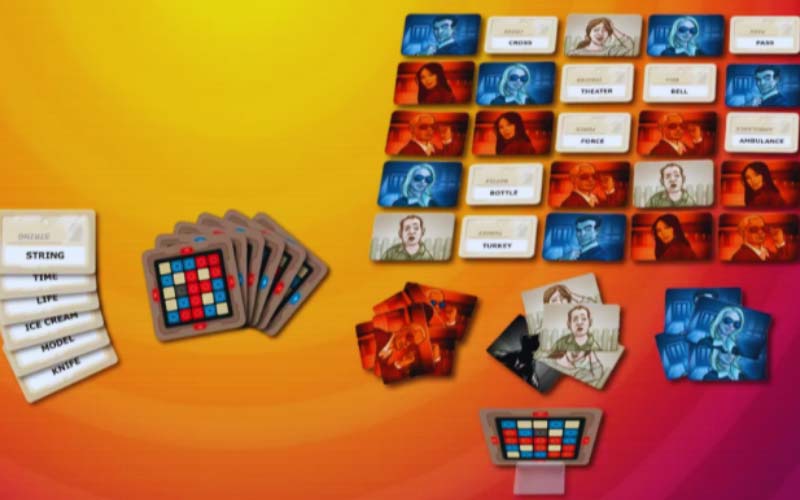
Codenames is a team word association game. Two teams race to identify their agents hidden on a grid of word cards. One player on each team is the Spymaster, giving one-word clues plus a number, while the rest of the team tries to guess the correct words without hitting the wrong ones. It’s clean, accessible, and brilliant at creating “that was genius” and “why would you ever think that” moments in the same round.
The setup
A grid of word cards goes on the table. A secret key card tells the Spymasters which words belong to each team, which are neutral bystanders, and which single word is the Assassin—your instant-lose landmine. The Spymasters can see the full picture. Everyone else is staring at a grid of normal words and trying to read minds using vibes and group psychology.
How it plays
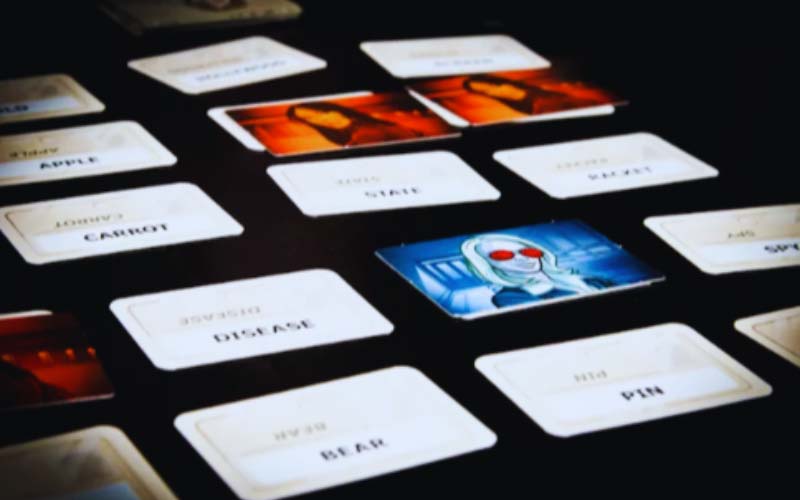
On your turn, your Spymaster gives a clue like “Ocean 2.” That means: two words on the grid relate to “Ocean.” The team discusses, points, debates, and makes guesses. Guess right, and you can keep guessing up to the number given (and usually one extra if you’re feeling brave). Guess wrong, and the turn ends—sometimes gently, sometimes with the sound of your team realizing you’ve just handed the other side a free point. Guess the Assassin, and it’s over immediately, no appeal, no mercy, just stunned silence and laughter.
The tension comes from balancing clue ambition and safety. Conservative clues are safe but slow. Big clues are exciting but risky, because one weird mental leap can send your team straight into neutral cards or, worse, the Assassin.
Why the pacing works
- Early game: everyone feels smart and bold because “these two are obviously connected”
- Midgame: the grid gets messy, clues get tighter, and people start saying sentences like “Okay but would ‘banana’ count as a tool?”
- Late game: one clue decides everything, teams overthink simple words, and someone confidently walks into disaster anyway
Table feel
Codenames is all talk, all the time. The best part is watching team logic form in real time—half deduction, half improv comedy. It scales well, especially with 6–8 players where the discussion becomes lively without turning into chaos. It’s also a great “between heavier games” pick because it sets up fast, ends cleanly, and makes everyone feel involved even when they’re not giving clues.
Who it’s for
- Groups who love wordplay, debate, and team energy
- Players who enjoy connecting ideas and arguing their interpretation like it’s a legal case
- Best for game nights with mixed experience levels and bigger groups
- You’ll like it if you want a party game that feels clever without being complicated
Less ideal for
- Not great for groups with big language gaps or players who freeze under pressure as Spymaster
- Avoid if your table hates discussion-heavy games or gets stuck in analysis paralysis
- Also note: it’s most fun when guesses are quick and confident—if your group debates every card for five minutes, it can drag
Desert Meeples Beginner Tip + Verdict
New to Codenames? As a guesser, don’t chase the “galaxy brain” connection—start with the most obvious link and only get fancy if you have a strong reason. As a Spymaster, prioritize safe, clear clues early and save the risky multi-hits for when the board is cleaner. Also: your teammates will misunderstand you. This is not a bug. This is the game.
Verdict: Codenames is a modern party staple: quick teach, high interaction, and replay value for days. It creates instant team stories—hero clues, tragic guesses, and that one round everyone swears was “technically correct.” If you’ve got a group that likes talking and laughing, this is an easy permanent resident on the shelf.

